

Discover evidence-based, medication-free methods for period pain: how heat, gentle exercise and TENS devices support you in everyday life.
Why does period pain occur?
Period pain affects many girls and women of childbearing age and can noticeably impair everyday life during their period. The medical term for painful menstrual bleeding is dysmenorrhoea. During the monthly cycle, the lining of the uterus thickens so that it can receive a fertilised egg. If no fertilised egg implants, the muscles of the uterus contract at irregular intervals and relax again, so that the top layer of the lining detaches and the tissue, mixed with blood, can flow out through the cervix and the vagina[1][2]. Some women feel only a slight pulling sensation, while in others this rhythmic contraction triggers cramp-like pain in the lower abdomen.
The primary cause of these contractions is the release of prostaglandins, hormone-like messenger substances produced by the body. In primary period pain, the body probably produces too much of them or is particularly sensitive to them[1]. This primary form is triggered solely by the contraction of the uterus and is more common in women under 30 and in women with heavy periods[2]. Secondary period pain is often caused by benign growths in the uterus such as fibroids or polyps; severe pain can also indicate endometriosis, in which uterine lining is also found in the abdominal cavity outside the uterus[2].
For 1 in 10 women, the symptoms are so severe that they are unable to cope with their normal everyday life for 1 to 3 days each month[2][1]. The pain is real and does not have to be endured in silence. Period pain can be limited to the lower abdomen but can also radiate into the back and legs[1].
Gynaecological examinations are important if the pain is very severe or keeps getting worse over time, because sometimes a treatable condition such as endometriosis is behind it[2]. Even if pain occurs outside your period or painkillers no longer bring relief, a gynaecological assessment is the most important first step.
Classic home remedies: heat and gentle exercise
For many of those affected, classic home remedies and gentle exercise are the first step in tackling cramp-like period pain without medication. There is evidence from studies that heat patches and heat belts can relieve pain during menstruation[2]; in addition, warm baths, hot-water bottles and sauna sessions can be experienced as soothing[1]. That is why many women instinctively reach for a hot-water bottle or a cherry pit heating pad or take a warm bath, as the heat on the skin feels pleasant and can contribute to subjective relaxation.
Gentle physical activity such as yoga, stretching exercises or a leisurely walk can loosen up the pelvic area and help to boost your general well-being on the days of your period. Physical activity also releases the body's own messenger substances, which can have a positive effect on pain perception. It is important to pay attention to your body's signals and to consistently avoid overexertion.
In everyday life, however, traditional aids such as hot-water bottles or heat pads reach their practical limits because they are tied to a power socket or cool down quickly. Mobile and discreet solutions, on the other hand, allow you to take soothing relaxation with you on the go, to work or into the lecture hall without restricting your freedom of movement.
TENS technology: innovative help for period pain
TENS technology (transcutaneous electrical nerve stimulation) is a medication-free method for the targeted relief of menstrual complaints. Via fine electrodes on the surface of the skin, the device sends gentle electrical impulses into the underlying tissue. These stimulation currents act on two physiological mechanisms of the body to positively modulate the subjective perception of pain.
The first mechanism is based on the scientific gate control theory: the electrical nerve impulses override the transmission of pain signals along the nerve pathways to the brain, so that the pain stimuli reach consciousness only in a muted form. Second, the targeted impulses can promote the release of endorphins, the body's own painkillers. This can contribute to a noticeable relief of the pain perceived in the lower abdomen.
The advantages of TENS for period pain lie in its uncomplicated, as-needed application:
- Pure, medication-free application without systemic side effects such as irritation of the stomach lining
- Direct placement of the electrode pads exactly where the cramp-like pain is located
- Individual adjustment of the intensity levels for optimal adaptation to your personal perception
- Versatile use at home, at work or during light everyday activities
Nerve stimulation offers a medication-free method that can provide support in managing menstrual complaints. However, TENS is not a causal therapy for conditions such as endometriosis but serves the targeted relief of accompanying period pain and muscular tension in the lower abdomen.
Comparison of Beurer TENS devices for your needs
A well-founded device comparison helps you choose the right model for your individual menstrual complaints. At Beurer, we have developed two certified medical devices, the EM 50 Menstrual Relax and the EM 55 Menstrual Relax +, which are specially tailored to the anatomical requirements of the female lower abdomen and combine electrical nerve stimulation with a heat function. If you would like an overview of modern TENS devices, you will find tailored solutions for home use in our range.
Both menstrual pads feature a flexible silicone design, simple button operation without a distracting display and 15 individually adjustable TENS intensity levels. Nevertheless, the models differ in key details regarding the electrode area and what is included in delivery:
| Model feature | EM 50 Menstrual Relax | EM 55 Menstrual Relax + |
|---|---|---|
| Intended purpose | Period pain & endometriosis pain relief | Period pain & endometriosis pain relief |
| Pad size / electrode area | Compact electrode area | Larger electrode area |
| TENS intensity levels | 15 levels | 15 levels |
| Heat function | 1 comfort heat level | 1 comfort heat level |
| Display / favourites function | No (no display, no favourites programme) | No (no display, no favourites programme) |
| Gel pads included | 2 gel pads | 4 gel pads |
| Charging cable | Standard USB-C charging cable | Specially encoded USB-C charging cable |
While the EM 50 Menstrual Relax, with its compact dimensions, sits particularly lightly and unobtrusively under close-fitting clothing, the EM 55 Menstrual Relax + offers wider coverage for larger areas of pain thanks to its larger pad area. Please note that, for safety reasons, conventional USB-C cables are not compatible with the EM 55 Menstrual Relax + and only the specially coded charging cable supplied may be used.
Holistic approaches: nutrition and relaxation
Nutrition and targeted relaxation techniques are valuable pillars for supporting your body holistically through the different phases of the menstrual cycle. In the case of premenstrual complaints, it is assumed that hormonal fluctuations during the female cycle play a role, which is why it is worth adapting your lifestyle to your cycle[3]. The hormone level itself is not the only decisive factor: women with PMS do not necessarily have altered hormone levels but may react particularly sensitively to breakdown products of progesterone, which is produced mainly in the second half of the cycle before the monthly bleeding starts[3].
An anti-inflammatory diet with plenty of fresh vegetables, berries, wholegrain products, linseed and healthy omega-3 fatty acids from vegetable oils or fish can support your body. On the other hand, it is advisable to cut down on highly processed foods, refined sugar, animal fats as well as nicotine and alcohol before and during your period, as these factors are associated with an increase in complaints.
Minerals such as magnesium are often taken in everyday life as dietary supplements for muscle tension. From a scientific point of view, however, magnesium is not a proven remedy for period pain, which is why it should only be regarded as a complementary nutritional measure without a guaranteed effect. If you are interested in taking supplements, it is advisable to consult a doctor.
Targeted relaxation techniques can also help to regulate pain perception positively. For milder premenstrual complaints, for example, some women try relaxation techniques, more exercise, less alcohol and coffee or a low-salt diet[3]. The following measures have proven effective in everyday life:
- Jacobson's progressive muscle relaxation (PMR) for systematic muscle relaxation
- Breathing exercises and guided meditations to reduce stress levels
- Sufficient sleep and fixed rest periods in the second half of the cycle
- Gentle stretching exercises for the pelvis and lumbar spine
Important safety instructions and contraindications
Safety instructions and contraindications must always be observed before using a TENS device for the first time in order to reliably rule out health risks. Although transcutaneous electrical nerve stimulation is a gentle and non-invasive procedure, there are clear medical exclusion criteria under which use is prohibited.
The strict usage and safety prohibitions include:
- Pregnancy: TENS must not be used during pregnancy
- Implanted electrical devices: women with pacemakers, defibrillators or similar implants must not use TENS
- Safety-sensitive situations: no use while sleeping, bathing or showering or while driving motor vehicles or operating machinery
- Placement restrictions: electrodes must not be applied to the neck, in the mouth area, to the eyes or to the chest and upper back at the same time
- Skin condition: use only on healthy, intact, clean and grease-free skin
When cleaning and caring for the gel pads: if necessary, carefully clean the pads with a damp, lint-free cloth under lukewarm water without chemical cleaning agents and always store them on the carrier film supplied after use. The enclosed instructions for use of the respective medical device are always authoritative for safe handling, the correct duration of use and all system-specific information.
Your everyday companion: the EM 50 Menstrual Relax
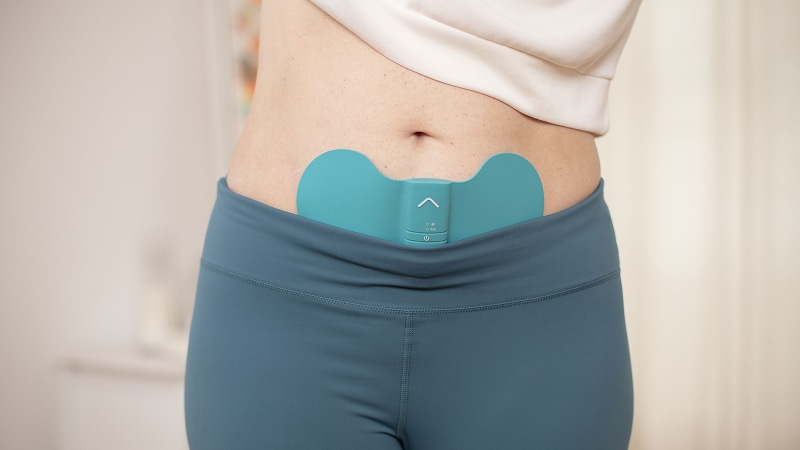
The EM 50 Menstrual Relax reliably helps you to relieve period pain and tension in the lower abdominal muscles in a natural, medication-free way. Thanks to its flexible fit made of medical silicone, the pad nestles unobtrusively against your lower abdomen and can be worn discreetly under your everyday clothing. With its 15 intensity levels of TENS technology and the optional, soothing heat function for relaxation, it offers you maximum flexibility at home, in the office or when travelling.
For women looking for a medication-free option to support them with menstrual discomfort, the EM 50 Menstrual Relax can be a suitable choice for everyday use. Thanks to the rechargeable battery, the pad is ready for use at any time and gives you back the freedom to shape your cycle actively and in a self-determined way.
Frequently asked questions
What can help with period pain without tablets?
Gentle exercise and comforting heat, for example from a heat pad, have proven effective as first measures. As a targeted alternative, you can also use a certified TENS device, which uses electrical impulses to override the transmission of pain.
Why do I have such severe pain during my period?
Your uterus contracts during bleeding to shed its lining. This process is controlled by prostaglandins. In 1 in 10 women, these messenger substances are so active that normal everyday life comes to a standstill for 1 to 3 days.[2]
Can diet influence my period pain?
An anti-inflammatory diet can support your body during your cycle. Cutting down on meat and taking in nutrients such as magnesium are considered useful support, even though they are not scientifically proven as painkillers when used as the only measure.[2]
When is period pain no longer normal?
If the pain is so severe that you have to interrupt your everyday life, or if it suddenly appears for the first time and keeps getting worse, you should seek medical advice. A cause such as endometriosis may be behind it, which should be clarified by a gynaecologist.
Why does period pain occur?
It is primarily caused by the natural contraction of the uterine muscles. In some cases, it is triggered by accompanying conditions such as fibroids or endometriosis as so-called secondary period pain, which is why it is important for a doctor to distinguish between them.