


Daylight Saving Time, Standard Time, and the Annual Back and Forth
Every year in spring and autumn, the clocks are changed – one hour forward, one hour back. But why are there two different time regulations and when exactly does the change take place?
Daylight Saving Time Change
Daylight Saving Time begins on the night from Saturday to Sunday on the last weekend of March – that is, on the last Sunday in March. The clock is set forward from 2:00 a.m. to 3:00 a.m. This makes it stay light for longer in the evening. This is intended not only to extend the daily routine but also to save energy. Due to the longer bright evening hours, less artificial lighting is needed.
Standard Time Change
Standard Time, also known as Normal Time, begins on the night from Saturday to Sunday on the last weekend of October – that is, on the last Sunday in October. Then the clocks are set back from 3:00 a.m. to 2:00 a.m. This corresponds more to the natural solar rhythm, as it gets light earlier in the morning, which is perceived as more pleasant, especially in the dark winter months.
Why and since when does the time change exist?
Although the time change has existed for a long time, it repeatedly causes discussions. While some enjoy the longer summer evenings, others struggle with the effects on their sleep rhythm. But how did this regulation come about in the first place?
The idea of adjusting the time to the daylight rhythm is not new. As early as the 18th century, inventor and politician Benjamin Franklin suggested using daylight more efficiently to save energy. However, it was not until World War I that the time change was actually introduced. By setting the clocks forward, energy consumption for artificial lighting was to be reduced.
After the war, daylight saving time was abolished in many countries, only to be reintroduced later – especially during the oil crisis in the 1970s. In Germany, the time change has been in its current form since 1980, and in 1996 it was standardised across the EU.
Today, the original benefit of the time change is increasingly being questioned. Numerous studies show that energy savings are minimal, while health effects such as sleep problems are increasingly coming into focus.
Mnemonic for the Time Change
So you don't have to think long next time about whether to set the clock forward or back, this simple mnemonic can help:
"Spring forward and fall back."

How does the time change affect our body?
Although it is only one hour, the time change can noticeably throw the body out of balance. This is because many processes in our organism follow a fixed rhythm – controlled by our internal clock. It regulates, among other things, our sleep-wake cycle, hormonal balance, body temperature, and even metabolism. Its most important timekeeper is daylight. A sudden change, such as the time change, temporarily disrupts this finely tuned rhythm.
Effects on the hormonal balance
The hormonal balance is particularly sensitive. The sleep hormone melatonin plays a crucial role: More is released when it gets dark, making us feel tired. With the switch to daylight saving time, it stays light for longer in the evening, delaying melatonin production. This can lead to us feeling tired later than usual, even though the alarm clock rings an hour earlier the next morning. As a result, a 'mini-jetlag' can occur, manifesting as fatigue, concentration problems, and reduced productivity.
Influence on mood and well-being
Mood can also suffer from the time change. Lack of light – especially in the dark season – can lead to a serotonin deficiency. Serotonin is a mood-enhancing neurotransmitter that is important for our well-being. At the same time, the melatonin level remains elevated in the morning, making us feel tired and lethargic. Many people complain of irritability, headaches, or digestive problems after the time change. The entire body needs time to adjust to the new routine.
Effects on sleep
The time change is particularly noticeable in sleep. In the first few days, it can be difficult to fall asleep at the usual time in the evening. The internal clock is still set to the old rhythm. Sleep quality can also suffer from the change. During the transition phase, when the body is adjusting to the new rhythm, sleep can be lighter and more restless. Many people wake up more often at night or feel like they are not sleeping through properly. This makes it harder to start the day refreshed in the morning.
The adjustment to the new time varies from person to person and can take between 4 and 14 days. While some hardly notice any changes, others struggle with fatigue and exhaustion until their internal clock regulates itself again. With the right strategies, however, the body can master the change more quickly.
Tips for a gentle adjustment to the time change
To help the body better adapt to the time change, it is worth taking targeted measures a few days in advance. Small adjustments in sleep habits, light use, and daily routine can help make the transition as smooth as possible.
Gradually adjust sleep rhythm
Those who do not want to confront the body abruptly with the new time can adjust the sleep rhythm a few days before the change. This means going to bed about 10 to 15 minutes earlier (when switching to daylight saving time) or later (when switching to standard time) each evening. This way, the internal clock can gradually adjust without the change being sudden.
Establish a sleep-promoting evening routine
Bright screen light from smartphones, tablets, or TVs can inhibit the production of the sleep hormone melatonin and make it harder to fall asleep. A good alternative is relaxing routines, such as reading a book, taking a warm bath, or doing light stretching exercises, which signal to the body that it is time to rest.
Nutrition: Avoid caffeine and heavy meals
The right diet can also help cope better with the time change. Heavy, fatty meals should be avoided in the evening, as they burden digestion and can make it harder to fall asleep. Caffeinated drinks such as coffee, cola, or energy drinks should also be avoided in the late afternoon and evening to avoid further impairing sleep.
Exercise and daylight as natural helpers
Regular exercise and fresh air support the internal clock. Daylight is particularly important as it regulates the release of melatonin and helps adopt the new rhythm more quickly. Those who exercise outdoors in the morning or early afternoon benefit from better adjustment and feel more alert overall.
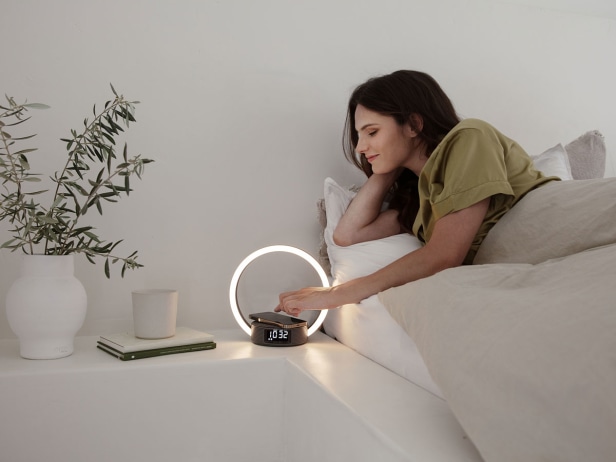
Light alarm clock and daylight lamp as support
Modern technologies can help make the time change more pleasant. A light alarm clock simulates a natural sunrise, making it easier to wake up in the morning. Especially in the dark season, this can improve the start of the day. Daylight lamps, which produce bright, natural light, can also help adopt the new rhythm more quickly. They simulate natural daylight and can thus compensate for light deficiency symptoms, boosting serotonin production and positively influencing mood.
Waking up naturally – how the Beurer light alarm clock eases the transition
A shrill alarm clock can abruptly wake us from sleep and make the start of the day unpleasant. The Beurer light alarm clock offers a gentle alternative. By simulating a coloured sunrise, it ensures a more relaxed and natural waking experience.
The Beurer light alarm clock uses a lamp that gradually becomes brighter, mimicking the natural process of a sunrise. The body responds to the increasing light by inhibiting the release of the sleep hormone melatonin, signalling to us that it's time to wake up. For added comfort, an alarm tone can be set to sound gently at the end of the light simulation. Particularly soothing sounds or gentle music complement the sunrise and make waking up even more pleasant.
This natural waking process not only helps to start the day more relaxed but also makes it easier to adjust to the time change. The gentle transition from darkness to light helps support the body in its natural rhythm, making the adjustment process less abrupt and disruptive. The light alarm clock can also be helpful when falling asleep: The simulation of a sunset provides a gradual darkening of the room, stimulating melatonin release, which makes it easier to fall asleep.
With a Beurer light alarm clock, you not only start the day refreshed and naturally but also support your internal clock in adjusting to new time rhythms.
>> More information on the Beurer light alarm clock can be found here


A Dr. med. Michael Feld: Schlafen für Aufgeweckte, 3. Auflage