

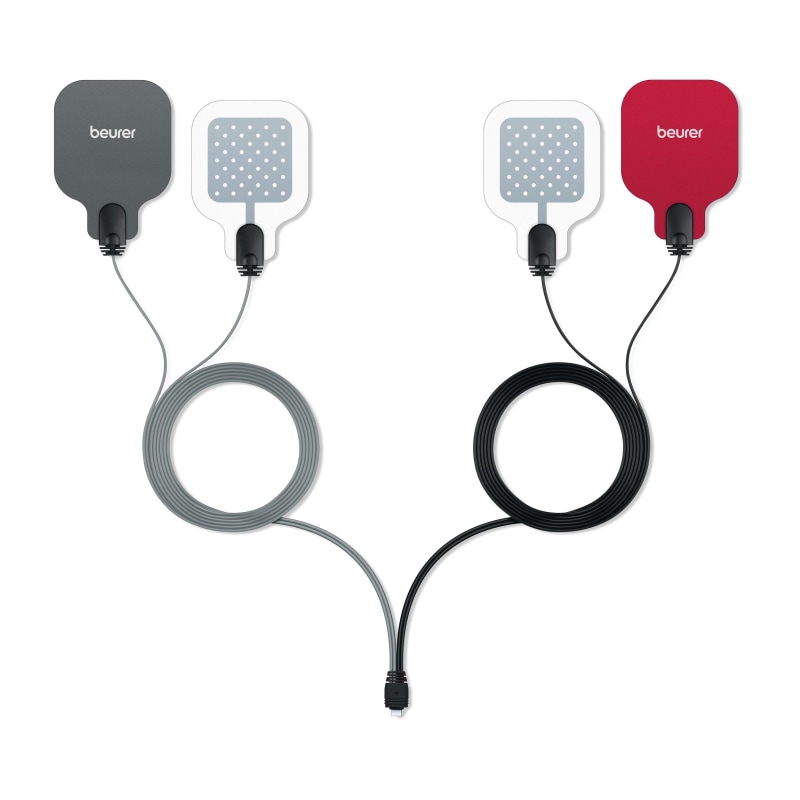
Neuralgia is among the TENS indications for our TENS/EMS devices. Whether TENS is an option for your polyneuropathy is something your treating practice will clarify. Any condition that makes TENS use sensible should be medically assessed beforehand. Polyneuropathy often shows up as pain and abnormal sensations in the feet, and later often in the hands as well.A When choosing a device, channels and electrodes therefore matter most. The Beurer EM 49 and the EM 56 each have 2 channels and 4 electrodes, while the EM 89 Heat has 4 channels and 8 electrodes. With its four separately adjustable channels, the EM 89 Heat can cover both sides of the body or larger areas evenly.
Whether a TENS device is suitable for nerve pain
A TENS device can be a complement for nerve pain once the condition has been medically assessed. Burning feet, tingling or a numb feeling in the toes accompany many of those affected through the day, often at night as well. Anyone looking for a TENS device for neuropathy often wants a complement that can be used at home. TENS stands for transcutaneous electrical nerve stimulation, meaning electrical stimulation of the nerves through the skin. For this purpose, electrodes are stuck onto the skin over the painful area, through which a stimulation device delivers impulses.B
What TENS is approved for
Neuralgia, meaning pain that originates from a nerve, is among the TENS indications for our TENS/EMS devices. This does not imply any blanket statement about suitability for polyneuropathy: any condition that makes TENS use sensible must be medically assessed beforehand. There you will also receive guidance on the benefits of self-treatment with TENS.
Polyneuropathy is a condition in its own right that affects several nerves at the same time. Whether TENS is a sensible complement for you is therefore something you decide together with the practice treating your polyneuropathy.
What polyneuropathy means for choosing a device
Doctors use the term polyneuropathy to describe damage to several peripheral nerves, which can lead to abnormal sensations and pain. The most common cause is diabetes.A When the sensory nerves are damaged, this can show up, for example, as follows:
- Tingling
- Numbness
- Burning pain
- Reduced or absent temperature sensation
- Wounds that do not hurt
Often the legs are affected first by these abnormal sensations, and later the hands as well.A This pattern matters when choosing a TENS device. The symptoms rarely sit in a single spot; they usually affect both feet and sometimes the hands as well.
Why the number of channels matters
A channel is its own circuit with two adhesive electrodes. With two separately adjustable channels, the electrodes of one channel are placed so that the painful spot lies between them, or one electrode sits directly on the painful spot. The electrodes of the second channel can treat further painful spots at the same time.
The more channels a device has, the more areas you can treat in one session, and each channel can be adjusted individually in intensity.
| Your symptoms | Channels | Suitable device |
|---|---|---|
| both feet, one channel per foot | 2 channels, 4 electrodes | EM 49 or EM 56 |
| feet and hands at the same time | 4 channels, 8 electrodes | EM 89 Heat |
| more electrodes per foot or larger areas | 4 channels, 8 electrodes | EM 89 Heat |
The table is a guide for choosing a device. The number of channels describes the technical equipment, but on its own it does not prove that the electrode positions mentioned are suitable for you. Which areas of the body can be treated at the same time, and where the electrodes may be placed, is something you clarify in advance with your doctor and using the instructions for use of your device.
Whether TENS or EMS is better for polyneuropathy
TENS and EMS both belong to the electrical stimulation devices used for treating pain and for muscle stimulation.C However, they pursue different goals. TENS devices deliver stimuli via the nerves to relieve pain, while EMS devices stimulate the muscles.D
EMS stands for electrical muscle stimulation. It includes an activating application, muscle training, and a relaxing application that can help release muscular tension.
For nerve pain, TENS is therefore the function that matters most to you. On these devices, EMS serves non-medical muscle stimulation. Whether it is an option for you and which program is suitable is something you clarify with your doctor in advance if you have polyneuropathy; you can also coordinate this with your physiotherapy.
Both functions in one device
When buying, you do not have to choose between TENS and EMS. The EM 49 and the EM 89 Heat both offer TENS and EMS programs as well as massage programs, namely 12 TENS, 32 EMS and 20 massage programs. The EM 56 also combines TENS, EMS and massage and offers 22 pre-programmed applications for TENS, EMS and massage. This way, one device covers both applications. Which program is suitable for you is something you clarify with your doctor in advance if you have polyneuropathy.
What to keep in mind with diabetic polyneuropathy
Diabetes is the most common cause of polyneuropathy, and this is exactly where an important safety rule applies. If you have diabetes, you should consult your doctor before using TENS or EMS. The same applies to all sensory disturbances with reduced pain perception, for example metabolic disorders.
Why your own perception matters
With TENS, the right intensity level depends on your subjective perception. The setting must never cause unpleasant sensations such as pain at the application site. This leads to an important point for people with polyneuropathy: if you perceive stimuli or temperature less strongly, you cannot reliably read this limit from your own perception. That is why the consultation with your doctor comes before the first application, and not only once something feels unpleasant.
When you should not use TENS
In these cases, TENS is not suitable:
- TENS must not be used if you have a cardiac pacemaker or any other implanted electrical device.
- TENS must not be used during pregnancy.
- The EM 56 and the EM 89 Heat must not be used with an insulin pump or with metallic or electrical implants. This applies to all device functions.
- Also observe all further contraindications and prohibited electrode positions in the instructions for use of your device.
The electrodes should never be placed on acutely or chronically diseased, injured or inflamed skin, and never on open or healing wounds. This is particularly important with polyneuropathy, because wounds on the feet sometimes do not hurt and are therefore easily overlooked. You should examine your skin carefully before every application.
Do not use TENS while sleeping, while driving or while operating machinery. Further contraindications such as cardiac arrhythmia or epilepsy are listed in full in the instructions for use of your device, which always take precedence over general advice.
What matters when using TENS with nerve damage
Three things matter during application: the right intensity, the correct position of the electrodes and pads that adhere well. Set the intensity so that you perceive the impulses as a pleasant tingling, never as pain.
Positioning the electrodes correctly
We recommend agreeing on the electrode positions for your area of application with a healthcare professional. The EM 49 and the EM 56 display the electrode position, which makes selecting a programme and placing the electrodes easier. The intensity of their 2 channels can be adjusted separately for each channel. The EM 49 can be used, among other areas, on the back, neck, shoulders, knees, hips, feet, arms and hands.
Keeping the electrodes adhering well
Adhesive electrodes only work reliably if they adhere well to the skin. Once the adhesion starts to fade, replace them with new ones. The same replacement sets are available for the EM 49 and the EM 56.
Which Beurer device suits you
Which TENS device suits you for polyneuropathy depends above all on how many areas you want to treat at the same time. All three devices belong to our TENS devices and therefore to the Beurer pain therapy range. All three are medical devices with a 5-year warranty.
Digital TENS/EMS EM 49 and EM 56: two channels for both feet
For both feet, the Digital TENS/EMS EM 49 is a very good choice: it has 2 channels and 4 electrodes. This means you can treat both feet with one channel each, for example, and adjust the intensity separately for each side. The display of the electrode position helps you with programme selection and placement.
The EM 49 has 12 TENS, 32 EMS and 20 massage programmes and runs on batteries (3 × AAA), which makes it light and handy. In its TENS device test, the F.A.Z. Kaufkompass (as of 30 June 2026) highlights the EM 49's extensive range of programmes, its pleasant application and its very good user guidance.E With likewise 2 channels and 4 electrodes, the Digital TENS/EMS EM 56 also treats both feet with one channel each. It displays the electrode position for you and comes with 22 pre-programmed applications comprising 9 TENS, 5 EMS and 5 massage programmes, and it runs on batteries. The EM 56 is also a medical device with a 5-year warranty.
Digital TENS/EMS with heat function EM 89 Heat: four channels for feet and hands
For treating feet and hands at the same time, the Digital TENS/EMS with heat function EM 89 Heat is a good fit. It has 4 separately adjustable channels and 8 electrodes, which allows for a large-area application. With its four individually adjustable channels, the EM 89 Heat adapts the intensity of the impulses to four areas of the body independently of each other, for example to cover both sides of the body. This means you can treat your feet and hands in a single application.
The EM 89 Heat has 64 pre-programmed applications with 12 TENS, 32 EMS and 20 massage programmes. In addition, there are 6 freely programmable programmes. A safety shut-off and a rechargeable lithium-ion battery are also included.
Two heat levels can be switched on with all programmes. The heat is a comfort feature that many people find pleasant, and it is not part of the intended purpose of the medical device. The F.A.Z. Kaufkompass writes about the device: “The Beurer EM 89 Heat is very pleasant to use and also convinces in all other aspects.” - F.A.Z. Kaufkompass TENS device test on faz.net (as of 30 June 2026).E
How to make your choice
If your symptoms are mainly in both feet, the EM 49 and the EM 56, each with one channel per foot, are a very good choice. If you want to treat your feet and hands at the same time or use more electrodes per foot, the EM 89 Heat with its four channels suits you better. In both cases, a consultation with your doctor should come before the first application.
Frequently asked questions
Is a TENS device suitable for nerve pain?
TENS is clinically tested and approved for neuralgia. Whether a TENS device makes sense for your nerve pain is something your treating practice will clarify. There you will also receive guidance on the benefits of self-treatment at home.
Is TENS or EMS better for polyneuropathy?
For nerve pain, TENS takes priority because it delivers stimuli via the nerves. EMS, on the other hand, stimulates the muscles, for example for muscle training or to relieve tension. The EM 49, the EM 56 and the EM 89 Heat have both functions, so you do not have to choose when buying.
What should you bear in mind with diabetic polyneuropathy?
With diabetes and with any sensory disturbance involving reduced pain perception, you should speak with your doctor before the first application. If you perceive stimuli more weakly, you cannot reliably judge the correct intensity from your own sensations. In addition, the electrodes should never be placed on injured skin or wounds.
Is one TENS device enough for both feet?
Yes, a device with two channels such as the EM 49 or the EM 56 is sufficient, as each supplies one foot with its own channel. If you also want to treat your hands or larger areas at the same time, the EM 89 Heat offers four individually adjustable channels with eight electrodes.


